Source oral surgery dental surgical motor for Implant, Surgery, and Root Canal
Compare 30 oral surgery dental surgical motor options from verified suppliers. Evaluate specifications like motor speed, torque, and material for implant equipment, endo motors, and specialized instruments.
Key considerations
Products List


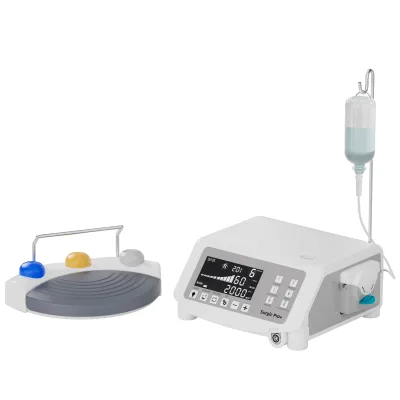


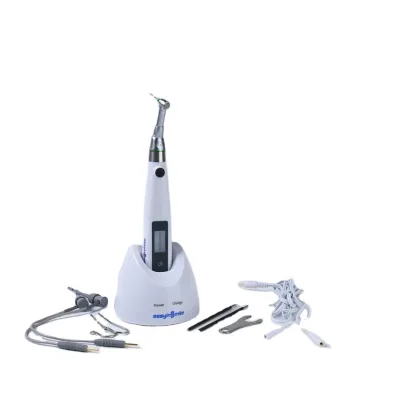
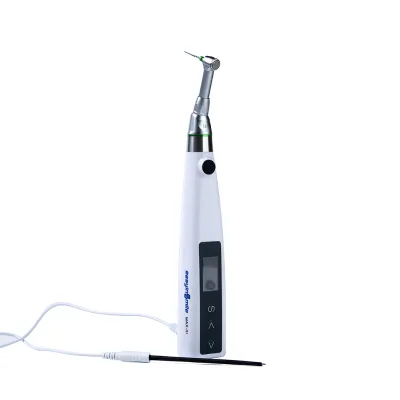


Comprehensive Sourcing Guide
Strategic Sourcing Guide for Oral Surgery Dental Surgical Motors
The procurement of specialized equipment for oral surgery requires a rigorous approach that balances technical precision with regulatory compliance. Buyers focusing on the core keyword "oral surgery dental surgical motor" must navigate a complex landscape of specifications, certifications, and operational requirements. This guide provides a structured framework for evaluating potential suppliers and products, ensuring that the selected equipment meets the demanding standards of modern dental surgical practices. The analysis below synthesizes observed market data and verified product attributes to assist procurement teams in making informed decisions without relying on unverified claims.
Technical Specifications and Performance Parameters
When sourcing dental surgical motors, the primary focus must be on the technical capabilities that directly influence surgical outcomes. The observed product data indicates a wide variance in performance metrics, necessitating a careful review of specific requirements for the intended surgical procedures. A critical attribute to verify is the motor speed range, as different surgical tasks demand distinct rotational velocities. Market observations show units operating within ranges such as 300rpm to 50,000rpm, while other models offer a span of 200 to 40,000rpm. Buyers must determine the specific torque and speed requirements for their procedures, as the data also highlights torque values reaching 55n/Cm and power outputs varying from 150VA to 400VA.
The power source and frequency compatibility are equally vital for global deployment. Most units listed utilize an electric power source with a standard frequency of 50/60 Hz, ensuring compatibility with various international power grids. However, the rated power differs significantly between models, with some specified at 150VA and others at 400VA. This variance suggests that the motor's capacity must align with the specific workload of the clinic. Additionally, the nature of the motor itself is a key differentiator; the data identifies "surgical brushless motor" as a common configuration, which often implies higher durability and reduced maintenance compared to brushed alternatives. The classification of these instruments as Class I devices further defines their regulatory risk profile and intended usage environment.
Regulatory Compliance and Certification Verification
Compliance with international standards is non-negotiable for medical devices used in oral surgery. The procurement process must prioritize verifying that products hold valid certifications such as CE and ISO. The observed product attributes explicitly mention CE certification and adherence to ISO 13485 standards, which is the international standard for quality management systems specific to medical devices. It is crucial for buyers to confirm that the supplier provides documentation proving the product's conformity to these standards, rather than relying solely on marketing claims.
The standard "ISO 13485" is frequently cited alongside the CE mark, indicating a robust quality management framework. However, buyers should exercise caution and verify the specific scope of these certifications. For instance, while some listings mention "Usage Surgical Implant" as a standard, this is an application description rather than a formal certification body. The distinction between a product standard and a certification mark is essential. The data also notes that these instruments are classified as Class I, which generally implies lower risk, but the specific regulatory requirements for Class I devices can vary by jurisdiction. Procurement teams must ensure that the "CE" mark on the product corresponds to the correct directive applicable in the buyer's region and that the "ISO 13485" certification is current and issued by an accredited body.
Cost Drivers and Economic Factors
Understanding the cost structure of dental surgical motors is essential for budgeting and total cost of ownership analysis. The observed price range in the market is substantial, spanning from 8 USD to 1516 USD. This wide disparity indicates that factors beyond the base unit price significantly influence the final cost. The material composition is a primary driver; products are listed as being constructed from Aluminum, Metal, Plastic, or PVC. High-performance surgical motors typically utilize durable metals like aluminum or specialized alloys to withstand the rigors of oral surgery, whereas lower-cost options may rely heavily on plastic components.
The Minimum Order Quantity (MOQ) also plays a significant role in the economic evaluation. The data shows an MOQ range from 1 to 10 units, with some specific listings requiring a minimum of 10 pieces or 1 set. Buyers must consider whether their volume needs align with these thresholds to avoid unnecessary inventory costs. Furthermore, the "Selling Units" are often listed as "Single item," which suggests flexibility for smaller clinics, but bulk purchasing may be required to access lower price points. The warranty period, observed as 1 Year in some listings and 2 Years for shelf life, adds another layer to the cost calculation, as extended warranties often correlate with higher initial investment but lower long-term risk.
Typical Applications and Departmental Suitability
The versatility of oral surgery dental motors is evident in their application across various departments within a medical facility. The product attributes specify applicability to the "Oral Department of Internal Medicine" and "Oral Surgery," highlighting their specialized role in surgical procedures. Beyond general surgery, the data points to specific applications such as "Implant dental surgical instruments" and "Root Canal Treatment." This indicates that the same core technology can be adapted for different procedural needs, from implant placement to endodontic work.
The nature of the equipment is described as "Specialized Instrument Equipment" and "Implant Equipment," reinforcing its targeted use. For clinics focusing on implantology, the motor's ability to handle "Planting Material" is a critical feature. The distinction between "Non-Disposable" usage and single-use items is also important; the data confirms that these motors are designed for repeated use, which impacts sterilization protocols and long-term maintenance. The "product name" often includes terms like "implant dental motor system," suggesting that the motor is part of a larger integrated system rather than a standalone tool. Buyers should ensure that the motor's specific application matches their clinical workflow, whether it involves high-speed drilling for implants or precise control for endodontic treatments.
Supplier Evaluation and Operational Support
Selecting the right supplier involves more than just comparing product specifications; it requires an assessment of the supplier's ability to provide ongoing support. The data highlights "Online Technical Support" as a key after-sale service attribute, which is crucial for maintaining operational continuity in a clinical setting. Buyers should evaluate the depth and responsiveness of this support, as technical issues with surgical motors can halt procedures. The "Brand Name" "althea" is observed in the listings, serving as a reference point for brand recognition, but buyers should not limit their search to a single entity.
The delivery method is another operational consideration, with "Courier" listed as the delivery option. This implies a reliance on third-party logistics, which can affect lead times and the condition of the equipment upon arrival. Buyers must verify the supplier's ability to handle packaging securely, as the "prod_packing" is listed as "1PCS/Box" or "Carton," depending on the model. The "prod_origin" is consistently noted as China, which is a common manufacturing hub for medical devices, but buyers should verify the specific factory capabilities and quality control processes of the origin facility. Additionally, the "Shelf Life" of 2 Years for certain components should be factored into inventory management strategies to ensure that equipment remains viable before deployment.
Quality Control and Long-Term Procurement Considerations
Ensuring the long-term reliability of dental surgical motors requires a proactive approach to quality control and maintenance. The "Instrument classification" as Class I suggests a baseline level of safety, but buyers must implement their own quality assurance protocols. This includes verifying the "Material" integrity, ensuring that aluminum or metal components do not degrade under repeated sterilization cycles. The "Water pump output" ranging from 0mL/min to 80mL/min is a specific specification that may relate to cooling systems or irrigation features, which must be tested for consistency and reliability.
Long-term procurement considerations also involve the "Usage Times" and durability of the motor. Since the equipment is "Non-Disposable," the motor must withstand thousands of cycles of operation. Buyers should request detailed maintenance schedules and spare parts availability from suppliers. The "Warranty" period of 1 Year is a standard offering, but buyers should negotiate terms that cover extended wear and tear. Furthermore, the "prod_standard" of "Usage Surgical Implant" indicates that the equipment is designed for specific high-stakes applications, and any deviation from this standard during use could compromise patient safety. Regular calibration and performance testing should be part of the procurement lifecycle to ensure that the motor continues to meet the specified speed and torque ranges over time.
Comparative Analysis of Key Product Attributes
To facilitate a clearer decision-making process, the following table summarizes the key technical and operational attributes observed in the market. This comparison highlights the diversity of options available and the specific parameters that buyers should prioritize based on their clinical needs.
| Attribute Category | Observed Variance | Key Considerations for Buyers |
|---|---|---|
| Motor Speed | 200-40,000 rpm to 300-50,000 rpm | Verify if the range covers the specific surgical procedures (e.g., implant vs. endo). |
| Power Output | 150VA to 400VA | Ensure the power source matches clinic capacity and surgical load requirements. |
| Material | Aluminum, Metal, Plastic, PVC | Assess durability and sterilization compatibility; metal is preferred for surgical use. |
| Certification | CE, ISO 13485 | Confirm validity and scope; ISO 13485 is critical for quality management. |
| MOQ | 1 to 10 units | Align order quantity with budget and storage capabilities. |
| Warranty | 1 Year (standard) | Evaluate terms for extended coverage and spare parts availability. |
| Application | Implant, Root Canal, Oral Surgery | Match motor type to specific departmental needs (Internal Medicine vs. Surgery). |
| Origin | China | Verify factory audits and quality control processes at the source. |
In conclusion, sourcing oral surgery dental surgical motors requires a meticulous evaluation of technical specifications, regulatory compliance, and supplier capabilities. By focusing on the verified attributes such as speed ranges, power outputs, and certification standards, buyers can mitigate risks and ensure the acquisition of high-quality equipment. The wide variance in market offerings necessitates a tailored approach, where the specific clinical requirements of the facility dictate the final selection. Ultimately, a successful procurement strategy balances immediate cost considerations with long-term operational reliability and patient safety.
FAQs
What certifications do oral surgery dental surgical motors typically hold?
These motors typically hold CE certification and comply with ISO 13485 standards. Buyers must verify that the documentation confirms conformity to these specific quality management systems for medical devices before purchasing.
How fast can these surgical motors rotate during procedures?
Motor speed ranges vary from 200 to 40,000 rpm or 300 to 50,000 rpm depending on the model. Users should select a unit where the specific speed range matches the requirements of their intended surgical tasks.
Which materials are used to construct these dental surgical instruments?
Construction materials include aluminum, metal, plastic, and PVC. High-performance surgical units often utilize durable metals like aluminum to withstand repeated sterilization cycles and the rigors of oral surgery procedures.
Can buyers customize these implant dental motor systems?
Customization is available for these specialized instrument equipment units. Procurement teams should confirm specific customization options with the supplier to ensure the final product meets unique clinical workflow requirements.
What is the minimum order quantity for these surgical motors?
The minimum order quantity ranges from 1 to 10 units or 1 set. Buyers must align their order volume with these thresholds to avoid unnecessary inventory costs while securing the necessary equipment.
How long is the warranty period for these dental equipment items?
The standard warranty period is typically 1 year for these electric power source units. Extended coverage terms should be negotiated to ensure protection against wear and tear during repeated non-disposable usage.